
Brand-New Auckland Townhouse: Multiple Defects Found During an Independent Building Inspection
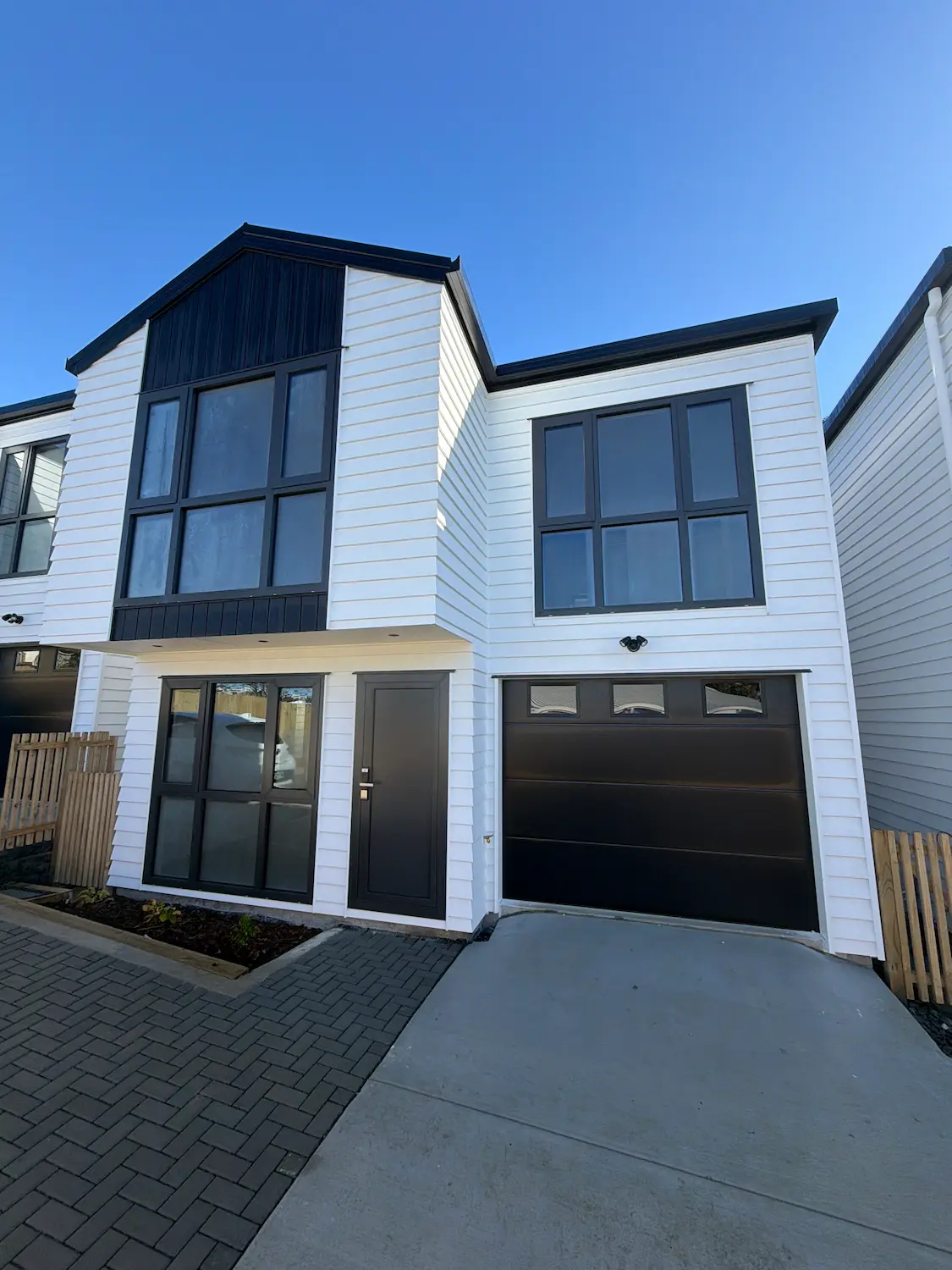
Six separate concerns were identified across site drainage, roof drainage, exterior flashing detail and internal moisture — including water actively discharging towards the dwelling and a very high relative moisture reading indoors. These findings gave the buyer clear grounds to request further specialist investigation before proceeding.
Brand-New Does Not Mean Defect-Free
A newly completed home can look immaculate during a viewing. That does not mean every part of the building and site has been completed correctly. During a recent independent inspection of this brand-new two-storey standalone Auckland townhouse, several concerns were identified across the site, drainage system, roof drainage, exterior detailing and internal moisture testing.
The most significant concern was at the rear of the property, where a substantial engineered retaining wall was associated with visible water discharge towards the dwelling. Taken together, the defects found at this one property demonstrate why an independent inspection can still be valuable even when a home is brand new.
1. Water Discharging From the Retaining-Wall Area Towards the House

Water was visibly discharging from the retaining-wall area and flowing across the rear ground towards the building. The ground was saturated and a defined water path had developed. The flow appeared to be reaching the edge of the new concrete slab, with erosion and apparent undermining around the slab edge. This warranted urgent further investigation of the retaining-wall and site-drainage arrangements by appropriately qualified professionals.
2. Surface-Water Sump Positioned Too High

A surface-water sump was observed with its inlet sitting noticeably above the surrounding ground level. With the surrounding area already saturated, this configuration appeared poorly suited to collecting low-level surface water. Instead, water was ponding and travelling across the ground. The drainage levels and installation should be assessed and corrected as necessary.
3. Standing Water and Debris in the Roof Drainage

Standing water, construction debris and contamination were visible within the roof guttering. On a newly completed dwelling, water remaining in the gutter can indicate that falls, outlets or installation details require checking. Debris should be removed and the complete roof-drainage system checked to confirm that water drains freely and does not remain trapped.
4. Head-Flashing Termination / Exterior Detailing Concern

The head-flashing termination at the exterior opening appeared poorly resolved, with the flashing finishing tightly at the adjoining cladding/detail. Head-flashing end details are important components of the exterior moisture-management system. Because this was a new build, the detail should be checked against the approved construction details and relevant installation requirements, and rectified where necessary.
5. Very High Relative Moisture Reading Internally

Non-invasive moisture testing identified a very high relative reading in an internal area corresponding with the external drainage concerns. The Protimeter SurveyMaster displayed a relative reading of 426 and indicated WET.
This is a relative, non-invasive reading and should not be interpreted as 42.6% timber moisture content. Non-invasive readings are used to identify anomalies and areas requiring further investigation. In this case, the elevated reading was particularly relevant because visible water and saturated ground were also present externally.
6. The Defects Need to Be Considered Together
Each observation is important on its own, but the greater concern comes from considering the property as a complete system. Water was visibly moving through the rear site, the surface-water inlet appeared too high to efficiently collect low-level runoff, the ground was saturated near the dwelling, and a very high internal relative moisture anomaly was recorded. Roof-drainage and exterior flashing details also required attention.
An inspection is therefore not simply a checklist of isolated defects. The relationship between site drainage, exterior moisture management, roof drainage and internal moisture indications can be critical when deciding whether further specialist investigation is required.
Why Inspect a Brand-New Home?
New homes can still contain incomplete work, installation defects, drainage problems or detailing that requires correction. Many of these issues may not be obvious during an open home or final walk-through, particularly when the dwelling itself presents as clean, modern and newly finished.
An independent pre-purchase or new-build inspection provides another set of eyes over the property. It can document visible defects and identify areas where builders, drainage contractors, licensed building practitioners, engineers or other appropriate specialists should investigate further.
What This Auckland New-Build Inspection Demonstrates
- Street appeal and a new finish do not confirm that site drainage is functioning correctly.
- Retaining-wall and surface-water drainage should direct water safely and should not create a flow path towards the building.
- Roof drainage and exterior flashing details still need careful inspection on newly completed homes.
- Non-invasive moisture testing can help identify internal anomalies that may correspond with external moisture conditions.
- Related defects should be assessed together rather than treated as unrelated cosmetic items.
Buying a New Build in Auckland?
Do not assume that new means defect-free. An independent building inspection can help identify visible construction, drainage, moisture-management and workmanship concerns before they become your responsibility.
Want this level of detail on your property?
Book an inspection and get a report written for buyers, not just builders.