
Weathertightness 101: Signs Your Home Might Be at Risk
Why Weathertightness Matters
New Zealand's "leaky building" era, particularly homes built between the mid-1990s and mid-2000s with monolithic cladding systems, left a lasting legacy of weathertightness issues. But leaky home risk isn't limited to that era — poor detailing, deferred maintenance, and design flaws can affect homes of any age.
Warning Signs We Look For
- Elevated moisture readings around windows, decks, and cladding junctions, even with no visible staining
- Monolithic cladding (solid plaster-style finishes) with insufficient ground clearance or cracked seals
- Decks and balconies attached directly to the main structure without adequate flashing or a drainage cavity
- Staining or bubbling paint on interior linings near external walls, particularly below windows
- Musty odours in wardrobes or rooms on external walls, which can indicate trapped moisture
- Poor ground clearance between cladding and finished ground or paving levels
Cladding Types That Warrant a Closer Look
Certain cladding systems from the leaky-building era — including some fibre-cement and stucco-style monolithic finishes without a drainage cavity — carry a higher statistical risk of weathertightness problems. That doesn't mean every home with this cladding has issues, but it does mean we pay particularly close attention during the inspection and take extra moisture readings.
What to Do If We Find Something
An elevated moisture reading isn't automatically a major defect — context matters, including where it's located and how it compares to readings elsewhere in the same wall. Where we find a genuine concern, we'll explain what it likely means, whether further invasive investigation is worth pursuing, and how it might factor into your purchase decision.
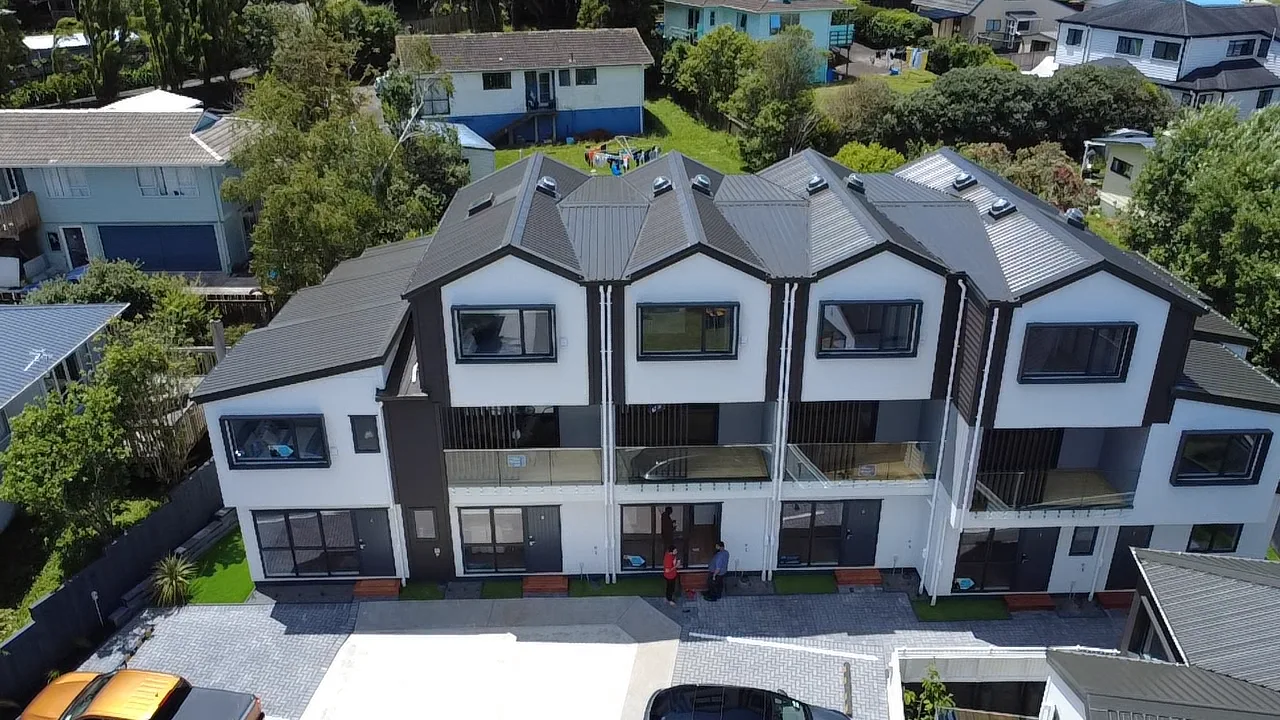
For a real example of what this looks like on site, see our case study on a brand-new Auckland townhouse where we found active water discharge towards the dwelling and a very high internal moisture reading — despite the property being newly built.
Ready to book an inspection?
Book online in minutes or call us to talk through your property.